Much analysis about what Gen Z cares about politically has read to me, a seventeen year old, as overly simplistic. To analysts Gen Z is Tiktok-poisoned, Covid-stricken, and obsessed with superficiality. I would like to clarify this analysis by positing that Gen Z, quickly ascendant into a bleak adulthood, is most concerned with affordability over culture issues and that affordability is the value that politicians should most greatly prioritize.
Gen Z is the internet generation. While millennials may have been the first generation to define and be shaped by culture on the internet, Gen Z is ‘internet innate’. We create lexicons of lore that appear bizarre to anyone older trying to comprehend any of it, from 67 jokes to AI-generated videos of celebrities. But really there is no joke to ‘get’, other than a broad understanding among fellow Gen Zers that the absurdity the Gen Z internet creates is the joke, indecipherable to anyone else. Internet memes emerge and are forgotten in a week. This is why Charlie Kirk’s assassination is much more culturally relevant than Trump’s assassination attempt. He understood that the internet runs on outrage, which is why his videos before his death followed a similar refrain: “OWNING the LIBERALS and the WOKE LEFT”. At this point, Trump is no longer shocking. Vulgarity amid a sea of meaningless apathy is the norm.
Eloquent policy speeches, or how politics was conveyed in a pre-internet age, is antithetical to the short bursts of attention-grabbing content that is the internet norm. The outrage internet amplifies the most shocking voices possible and grows them into movements with algorithms that cater to those voices. That this is the internet Gen Z has grown up on–and which many consider their refuge–is illustrative of how the world we consider our home, in truth, refracts our nihilism into an endless joke, an escape from adulthood’s reality.
What is adulthood’s reality? What is the world I, a high school senior graduating next year, will emerge into? The numbers aren’t pretty. A new report from the National Association of Realtors observes that the median age of first-time homeowners has risen to 40, and the share of first-time home buyers dropped to a record low of 21%. Fortune reports that the unemployment rate for 16-24 year olds is well above the national average. The rate for young workers hit 10.8% in July, compared to 4.3% overall.
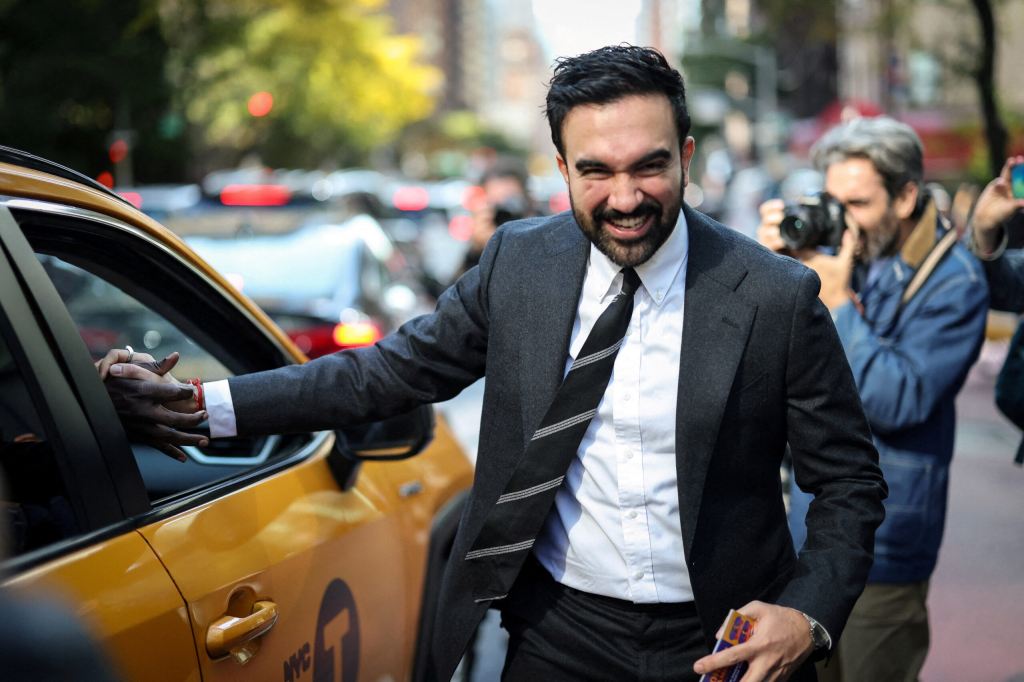
In light of this, it’s unsurprising that Zohran Mamdani was so successful among the Gen Z cohort, racking up votes from three out of four young voters. He represents genuine progressivism with a social media strategy that circumvented the apathy of the endless scroll that Gen Z is intimately familiar with. Algorithms are, writ large, escapism from the world outside; Mamdani made his community the centerpiece. More compelling was his message: making New York City more affordable. What differentiated Mamdani was his direct campaign: not only vague promises of affordability, but specific plans of action to that end. Other Democratic politicians running for office, such as James Talarico in Texas, also prominently feature affordability, but lack the methodology for how this objective would be implemented and achieved. Addressing affordability is only the prerequisite to identifying its solutions. Mamdani’s success proved that affordability is the most important issue of the moment.
Mamdani’s campaign was tailored specifically to the locality of New York City; his message may not be the path other Democratic candidates should replicate if they run in a less blue or diverse area. Democrats’ successes in New Jersey, Virginia, and California demonstrate the efficacy of tailoring Democratic issues to the state’s locale. However, Mamdani’s campaign should be remembered for its definite successes: effectively leveraging social media to deliver campaign issues and directly identifying and promising solutions alleviating young voters’ economic concerns. In an uncertain economy, other candidates, should they seek to win, must incisively address affordability to engage Gen Z.
 The California Chronicle
Leave a comment